The Old Gods of The Shore: A Field Guide
The Shore’s Steam page says its story is based on the works of H. P. Lovecraft and “features many of his best-known creations”. This is a quick guide to the ones a player meets, or hears about, on the island: what Lovecraft wrote, and where the game shows them. No endings, no boss solutions. Our longer articles go deeper on each.
Dagon
In Lovecraft: a colossal sea being glimpsed in “Dagon” (1919), worshipped in “The Shadow over Innsmouth” (1936) as Father Dagon, lord of the Deep Ones, by a cult called the Esoteric Order of Dagon.
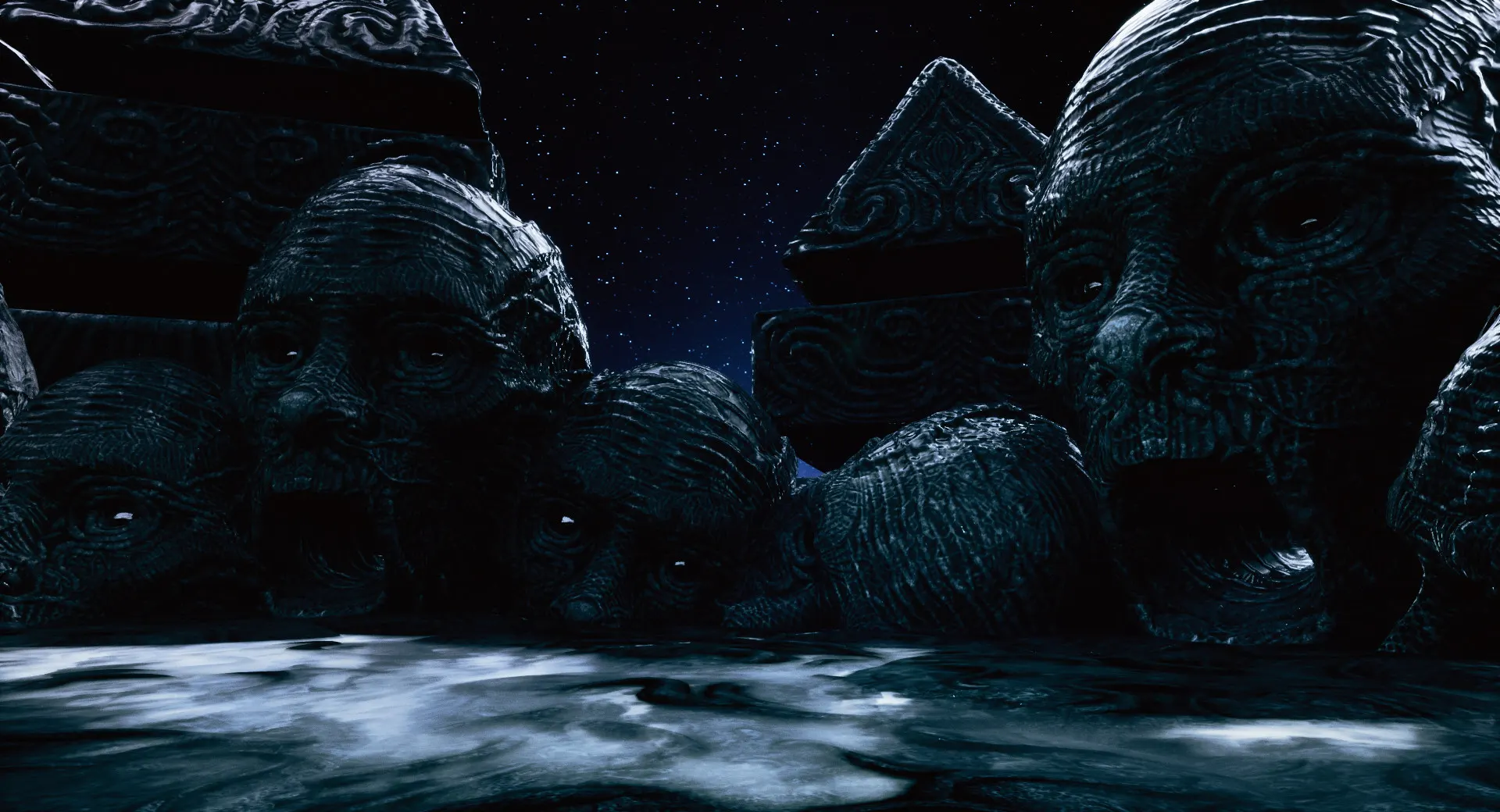
In The Shore: he has an achievement named after him and his own piece of music, the “Dagon Theme” by Thanos Zampoukas. The game’s carved stone faces at the water’s edge and its sunken gates belong to the same world as the monolith in Lovecraft’s story.
The Deep Ones
In Lovecraft: an undying race of fish-like humanoids living under the sea off Innsmouth, who trade gold and fish for human partners and whose half-human children return to the water.
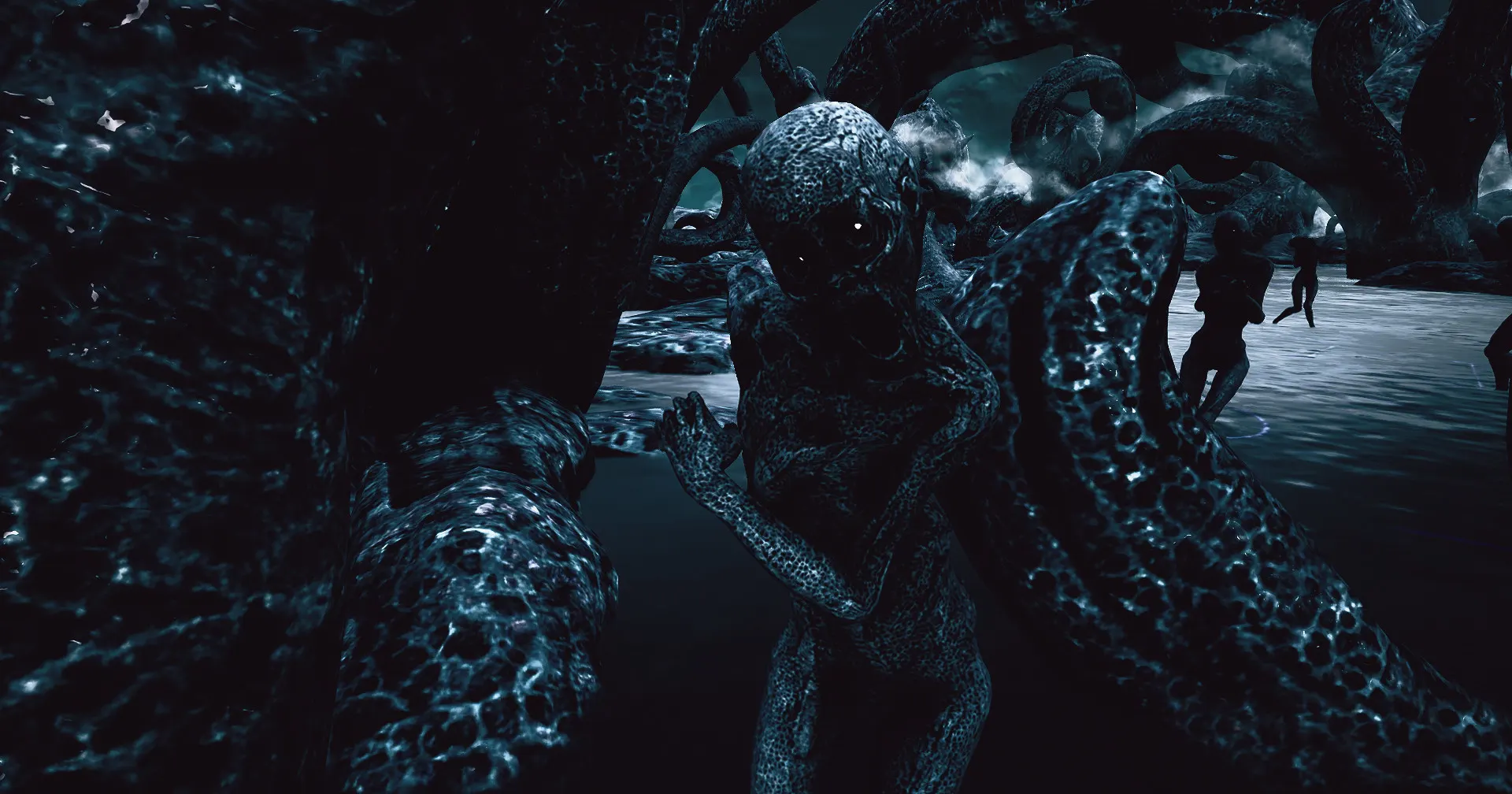
In The Shore: scaled, man-shaped creatures that come out of the surf on the island’s beaches. They are the enemies a player is most likely to remember.
Cthulhu
In Lovecraft: the great dreamer of “The Call of Cthulhu” (1928), a winged, tentacle-faced god sleeping in the drowned city of R’lyeh until the stars are right, whose dreams drive artists and cultists mad.
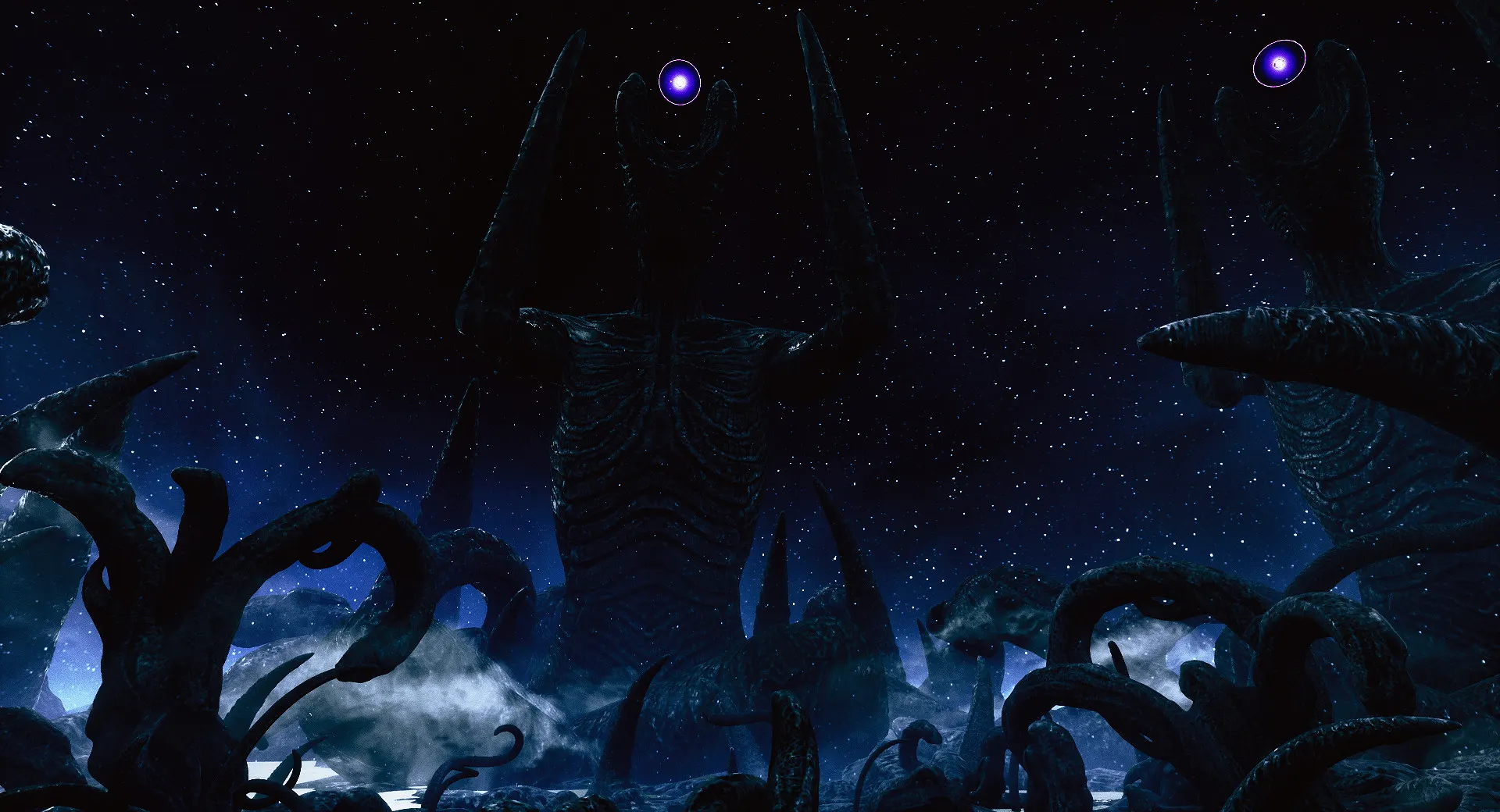
In The Shore: two achievements quote him. “Fhtagn” is the last word of his cult’s chant, and “Is he awake?” asks the question every Lovecraft reader dreads. The key art of The Shore VR puts a tentacled giant in the deep water.
The cult
In Lovecraft: human worshippers are everywhere in his stories, from the swamp cult in “The Call of Cthulhu” to the church of Innsmouth. They are often more dangerous than the gods, because they open the doors.
In The Shore: the island was lived on, and the notes Andrew finds come from the people who were there before him. An achievement called “Toss a coin to your cultist” makes it clear they are not entirely gone.
The things without names
In Lovecraft: some of his worst horrors are never named: the living colour of “The Colour Out of Space” (1927), the invisible thing of “The Dunwich Horror” (1929), the shapeless shoggoths of “At the Mountains of Madness” (1936).
In The Shore: three achievements sound like witnesses to things like that: “It was just a colour”, “It walks!” and “It breeds by itself!”. How they connect is for the player to find.
The artifact of the old gods
In Lovecraft: forbidden objects run through his fiction, from the Necronomicon to the strange gold jewellery of Innsmouth. Knowledge of the old gods always comes at a price, usually the mind of whoever holds it.
In The Shore: the official description of the Enhanced Edition speaks of “artifacts of the old gods” that help Andrew survive, and warns that every power has a cost. It is the only weapon in a game where most problems are better run from.
Where to start reading
- “Dagon” (1919): ten minutes, and the clearest key to the game.
- “The Call of Cthulhu” (1928): the god, the cult and the chant.
- “The Colour Out of Space” (1927): horror with no monster at all.
- “The Shadow over Innsmouth” (1936): the Deep Ones and their town.
All four are in the public domain. Then go to the island: platforms and stores are on the home page, and the setup of the story is on the story page.