Cthulhu in The Shore: The Dreamer Under the Sea
Two of The Shore’s achievements are short and odd. One is called “Is he awake?”. The other is a single word: “Fhtagn”. Anyone who has read Lovecraft knows who they are about. For everyone else, here is the god who sleeps under the Pacific, and why a question about his sleep is the most frightening question you can ask.
The Call of Cthulhu, 1928
Lovecraft wrote “The Call of Cthulhu” in 1926, and Weird Tales published it in February 1928. It is built like a file of evidence. A man in Boston goes through the papers of his dead great-uncle, a professor, and pieces together three stories that should have nothing to do with each other.
- A young sculptor dreams of a city of green stone and wakes to carve a monster he has never seen.
- A police raid in the swamps near New Orleans breaks up a cult, and the cultists worship an idol of the same monster.
- A Norwegian sailor’s account describes an island that rose from the sea in 1925, a city of impossible angles on it, and a door that opened.
All three point to Cthulhu: a vast being with a head of tentacles, scaled wings and a body like a dragon, sleeping in the drowned city of R’lyeh until the stars are right.
What “fhtagn” means
The cultists in the swamp chant a line in a language no human was built to speak: “Ph’nglui mglw’nafh Cthulhu R’lyeh wgah’nagl fhtagn”. One of them translates it for the police:
“In his house at R’lyeh dead Cthulhu waits dreaming.”
H. P. Lovecraft, “The Call of Cthulhu” (1928)
“Fhtagn” is the last word of that chant, and fans have long read it as “waits” or “dreams”. When The Shore gives you an achievement called “Fhtagn”, it is quoting the cult’s prayer back at you.
Dead, and not dead
The story’s most famous lines are a couplet that Lovecraft had first used in an earlier tale, “The Nameless City”:
“That is not dead which can eternal lie, / And with strange aeons even death may die.”
H. P. Lovecraft
This is the core of Cthulhu. He is not a monster that hunts. He does not need to. He sleeps, and his dreams leak into the minds of sensitive people across the world: artists, mystics, the mad. The horror is that he is still there, that the sleep can end, and that our whole history may be one long night between his waking hours.
“Is he awake?”
That is why an achievement with that name lands so hard. On an island where the old gods are coming back, the question is not whether Cthulhu exists. It is whether he has opened his eyes. We will not say what earns the achievement. It is enough to know the game asks the question.
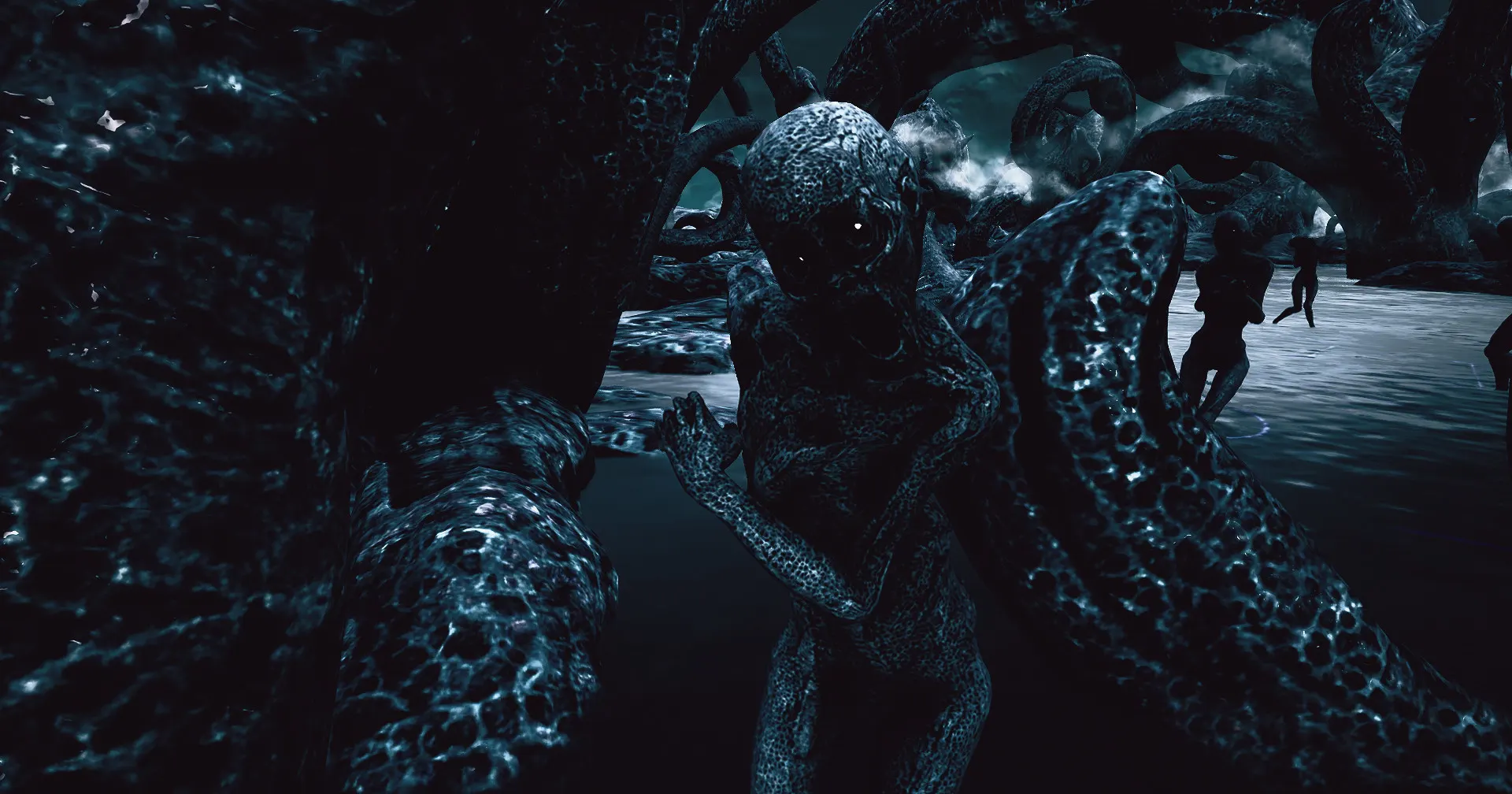
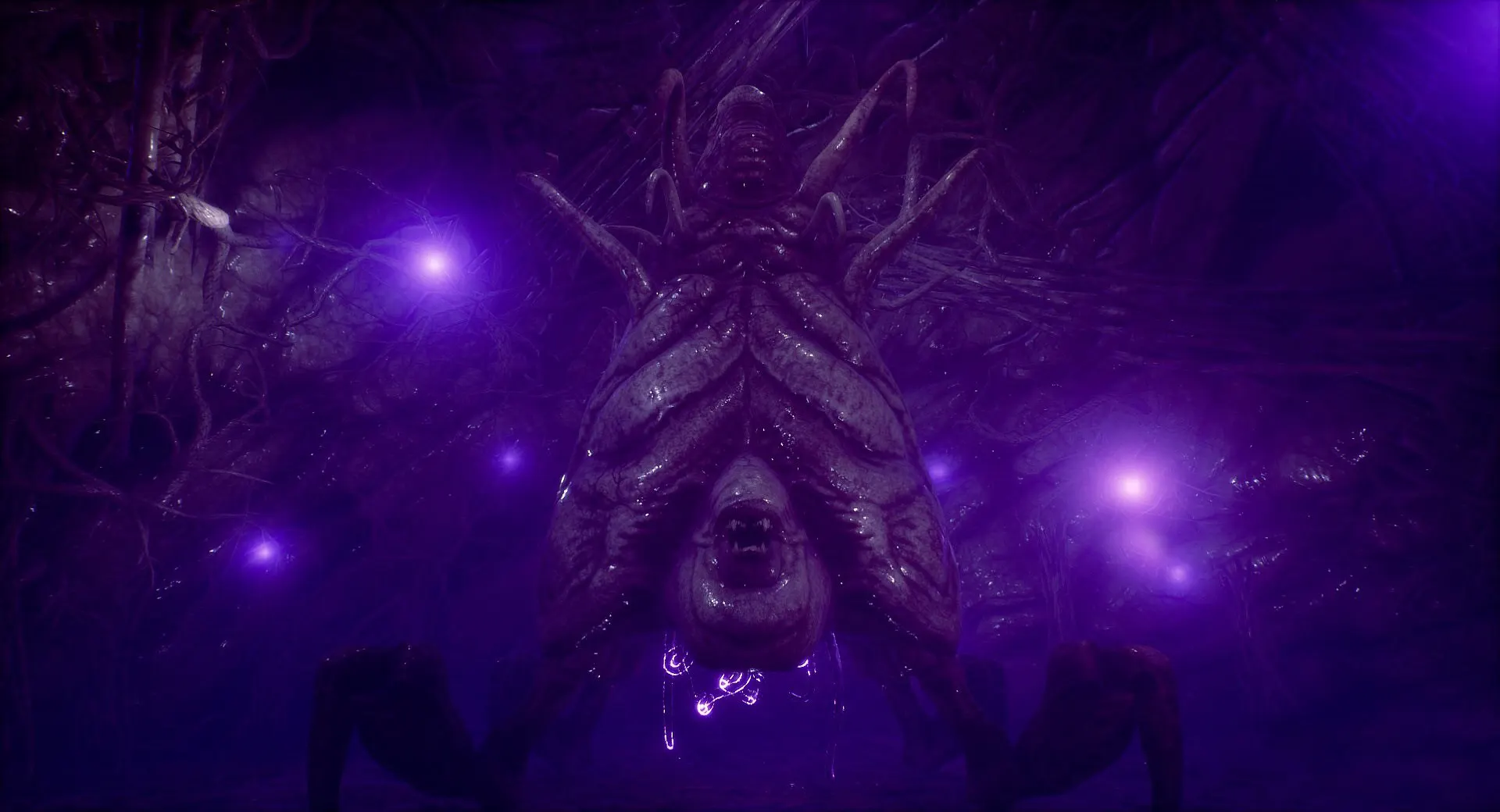
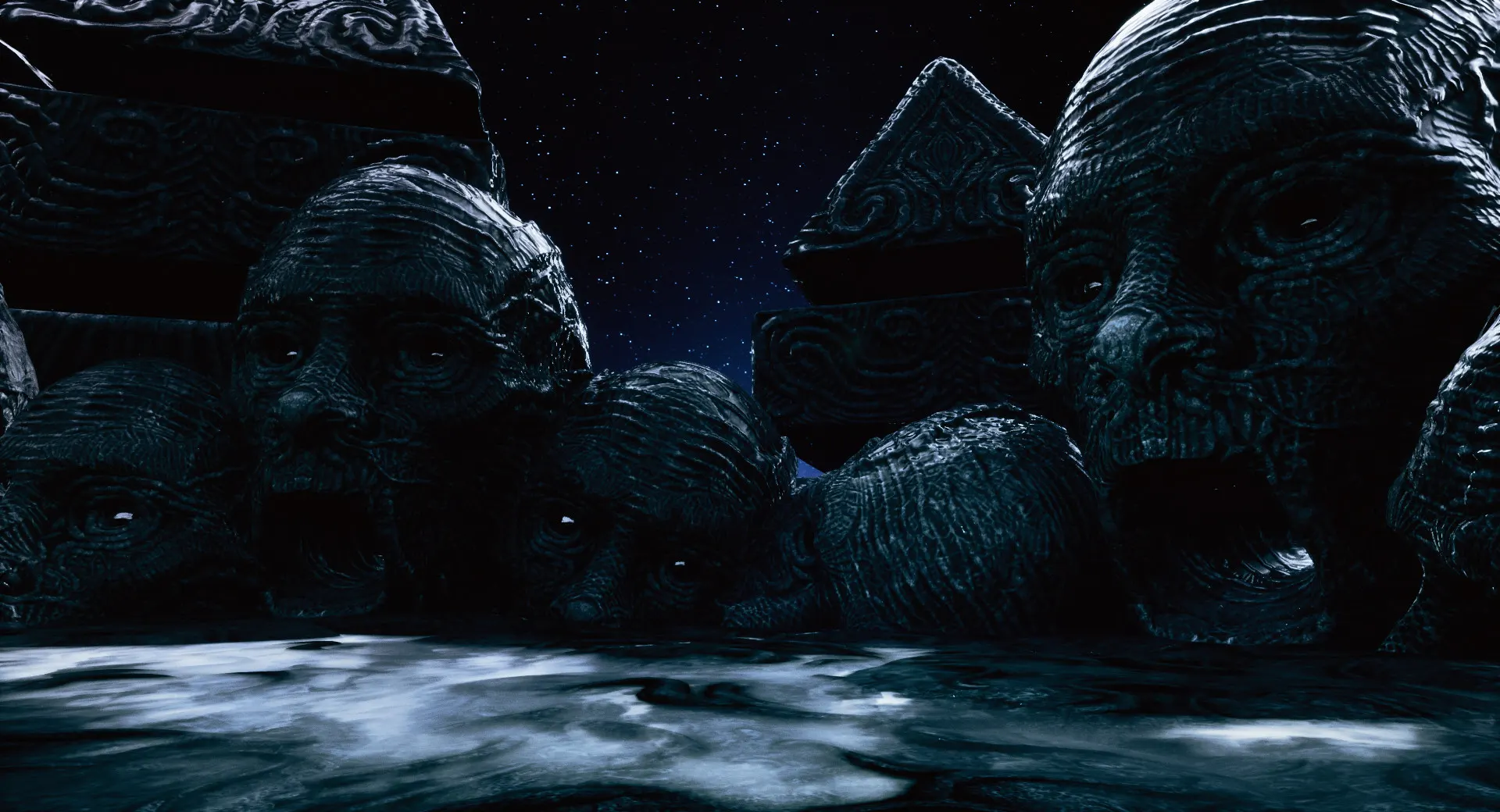
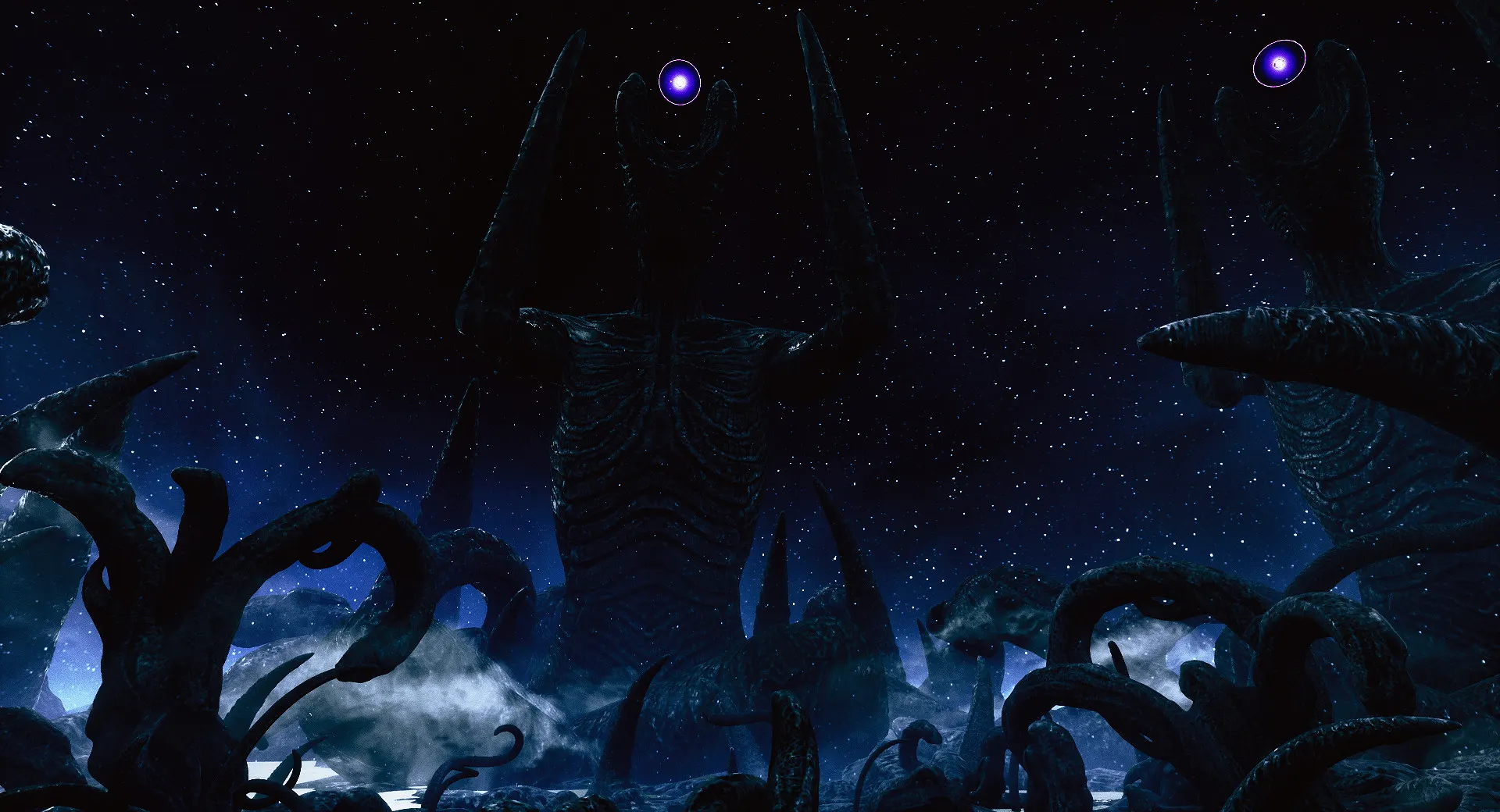
The Shore’s description on Steam promises that the story “features many of his best-known creations”, and the key art of The Shore VR shows a tentacled giant in deep water. The shape is unmistakable. Wikipedia’s article on the game notes that Lovecraft’s best-known entities appear in it directly, and Cthulhu is the best known of them all.
Why the sea, again
Cthulhu sleeps underwater. Dagon rises from it. The Deep Ones live in it. For Lovecraft the ocean was the one place on Earth large and dark enough to hide something older than mankind, and The Shore is built on that idea: an island where the tide has been going out for a very long time, and is now showing what was under it.
“The Call of Cthulhu” is in the public domain and takes under an hour to read. Read it before you play, or after, and the achievement names will never look innocent again.
More about the island, without spoilers, is on the story page. The virtual reality chapter set after the game is on The Shore VR page.