The Colour Out of Space and the Nameless Things of The Shore
Some of The Shore’s achievement names sound like the last words of a witness. “It was just a colour.” “It walks!” “It breeds by itself!” None of them names a god. That is the point. Some of Lovecraft’s most frightening creatures have no name at all, and the scariest of them is not even a creature.
A note before we start: the links below between achievements and stories are our reading of the names. The game does not explain them, and we will not spoil what earns them.
The Colour Out of Space, 1927
Lovecraft wrote “The Colour Out of Space” in 1927, and Amazing Stories published it that September. It was one of his own favourites. A surveyor comes to the hills west of Arkham to plan a new reservoir and finds a stretch of grey, dead land the locals call the blasted heath. An old man tells him what happened there.
Decades earlier a meteorite fell on the farm of Nahum Gardner. It was hot, it shrank, and inside it scientists found a globule of a colour no one could describe, a colour that “was only by analogy” a colour at all. Then it was gone. The next year the farm’s fruit grew huge and tasted foul. The plants glowed at night. The animals changed. Then the family did.
Nothing in the story has teeth or claws. The thing from space is light that should not exist, and it feeds on life slowly, from the inside. When it finally leaves, it takes the farm with it and leaves a scar that never heals.
“It was just a colour”
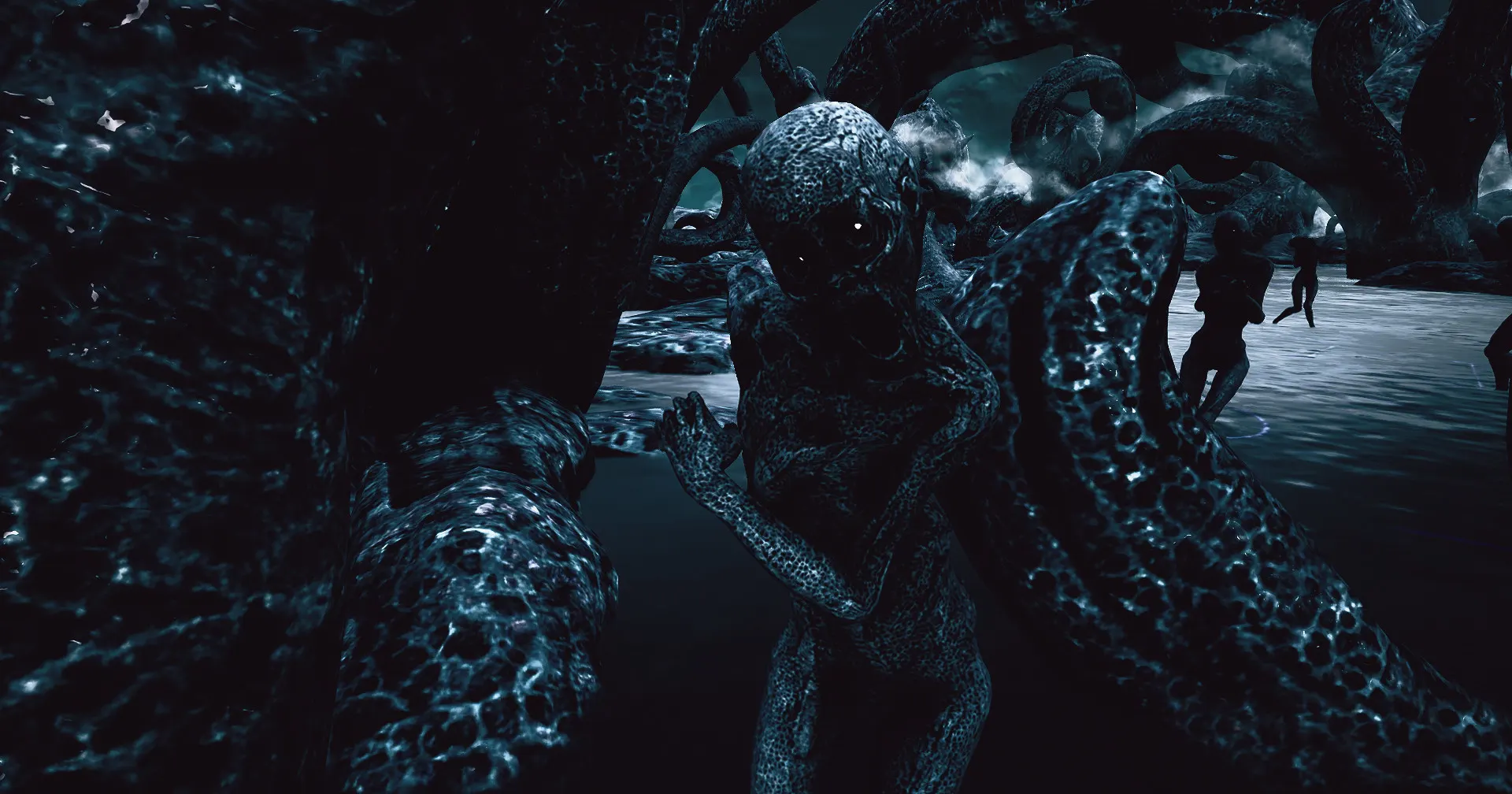
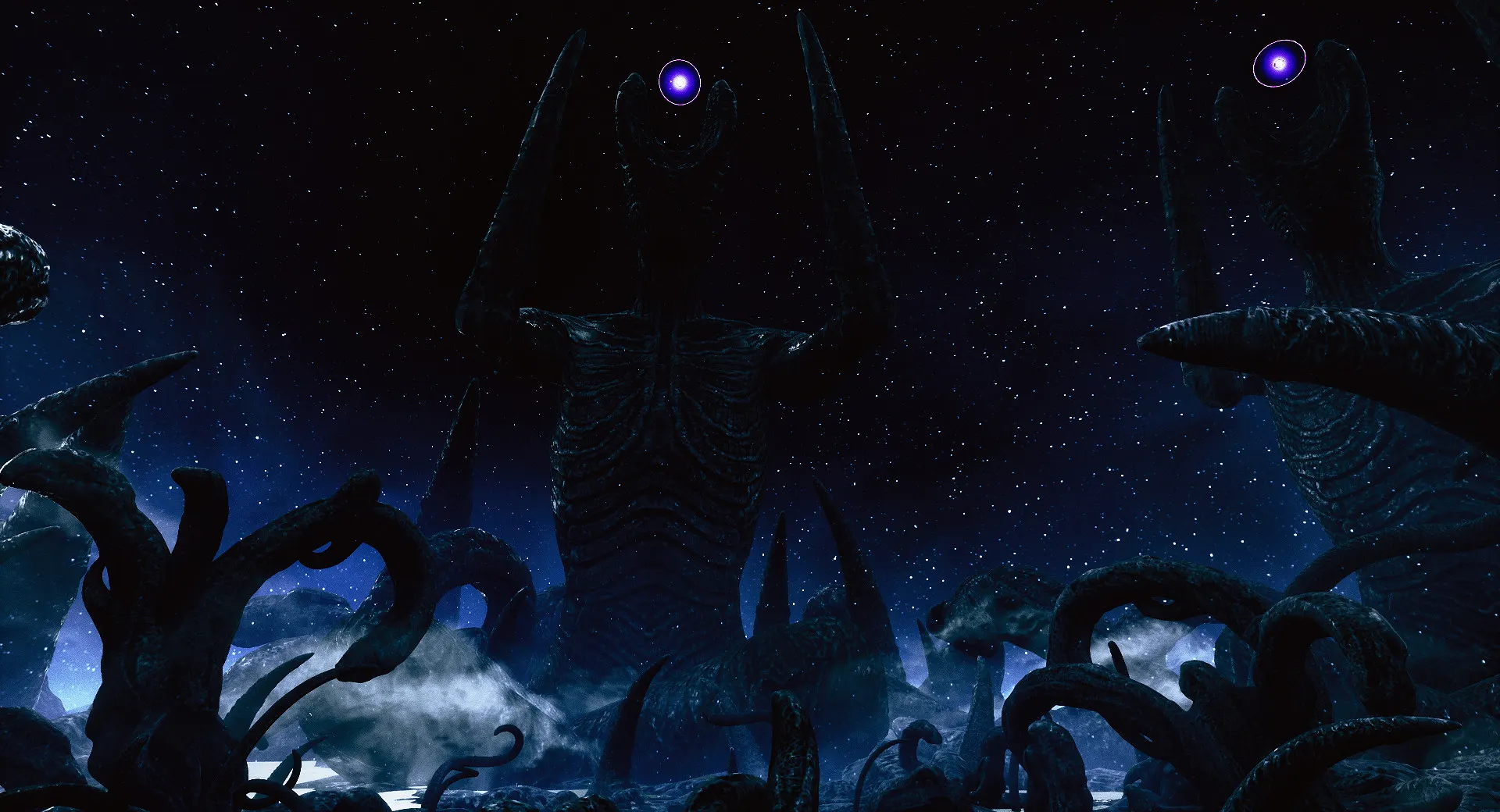
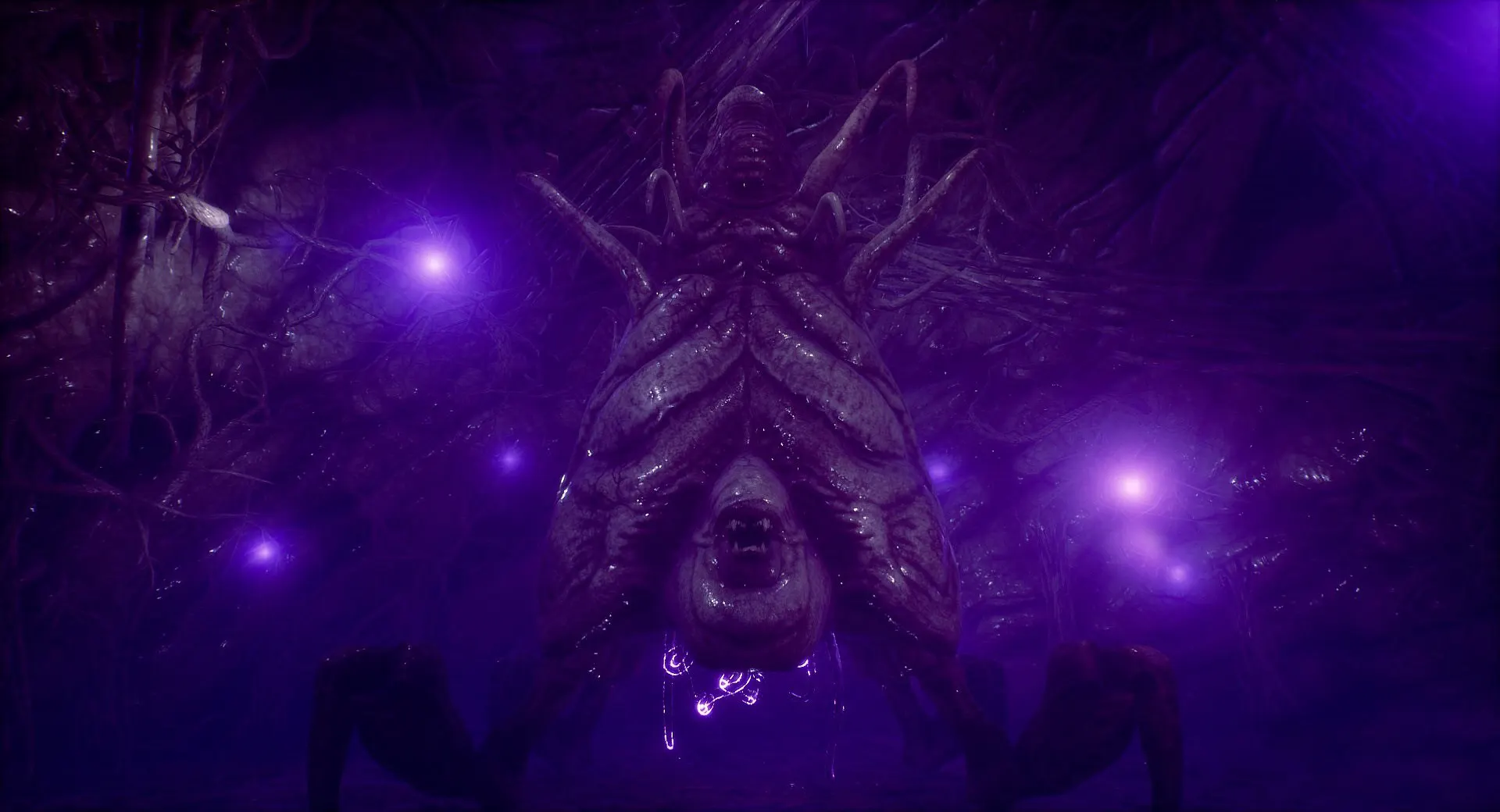
Read against that story, the achievement name reads like an attempt at comfort that does not work. Lovecraft’s narrator knows exactly how wrong it is to say “just” about that colour. The Shore’s island has its own glowing, unnatural light: purple orbs hang around some of its strangest entities in the screenshots, and the trailers flash with colours the grey coast should not contain.
“It breeds by itself!”
Lovecraft has a goddess who does exactly that: Shub-Niggurath, the Black Goat of the Woods with a Thousand Young. She appears mostly in chants and invocations across his stories, a fertility god turned inside out, endlessly giving birth to things no one wants to see. Whether the achievement points to her is anyone’s guess. It is hard to read the name and not think of her.
Lovecraft’s world is full of life that reproduces without permission: the shoggoths of “At the Mountains of Madness” (1936), shapeless servants that grew beyond their makers; the Deep Ones of Innsmouth, who breed with humans. The idea that something keeps multiplying while you look away is one of his oldest fears.
“It walks!”
The third name is the simplest and the worst. Something that should not move, moves. In “The Dunwich Horror” (1929) the climax turns on an invisible thing crossing the hills, known only from flattened trees and enormous footprints. In “The Call of Cthulhu” the sailors watch a mountain of flesh climb out of its tomb. In both, the worst moment is not seeing the monster. It is understanding that it can follow you.
Fear without a name
Lovecraft opened his essay “Supernatural Horror in Literature” with a line every horror designer knows: the oldest and strongest kind of fear is fear of the unknown. The old site of The Shore quoted it on its front page, and the game is built around it. Dagon and Cthulhu have names and myths. These achievements belong to the things that do not, the ones Andrew can only describe after the fact, in a sentence that ends with an exclamation mark.
“The Colour Out of Space” is in the public domain and is one of the best places to start with Lovecraft. The setup of The Shore, without spoilers, is on the story page, and the full list of questions players ask is in the FAQ.