Dagon and the Deep Ones: The Sea Gods of The Shore
Of all the old gods in The Shore, one has its own achievement and its own piece of music. The achievement is called “Dagon”. The track on the official soundtrack is the “Dagon Theme”. To understand why a fisherman searching for his daughter keeps running into the sea, it helps to go back to where Dagon came from.
A god older than Lovecraft
Dagon was worshipped long before anyone wrote horror. He appears in the Hebrew Bible as a god of the Philistines, with a temple at Ashdod, and for centuries readers pictured him as half man and half fish. Modern scholars argue about that image, and most now link the name to grain rather than fish. Lovecraft did not care. The fish-god was the version that had survived in the popular imagination, and it was the one he used.
Dagon, the 1919 story
Lovecraft wrote “Dagon” in 1917, and it was published in 1919. It is short, and it reads like a confession. The narrator is a sailor who escaped a German raider during the First World War and drifted alone in a small boat. He wakes to find the sea floor has risen around him: a plain of black mud, rotting fish, and a silence he cannot stand.
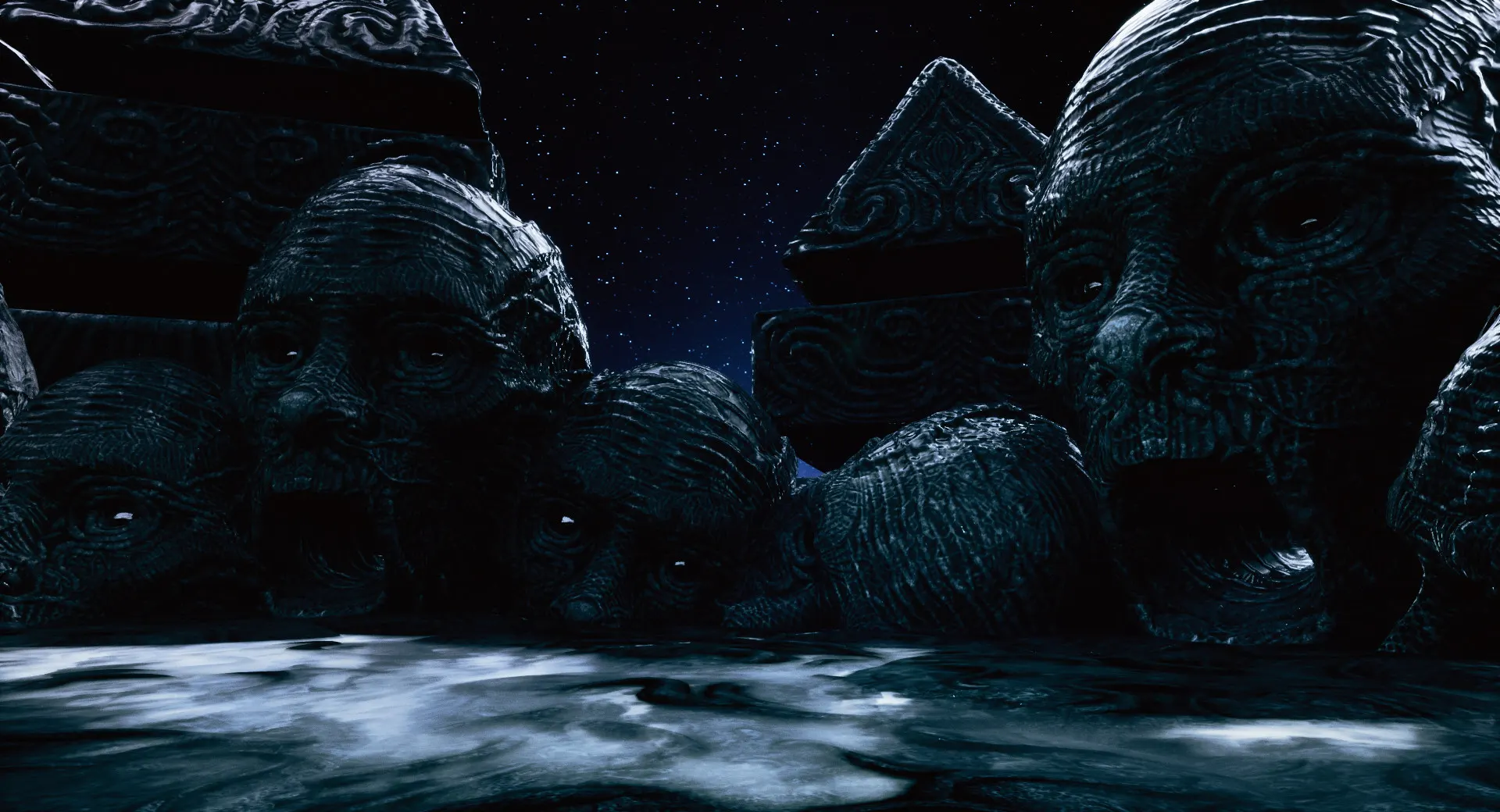
He crosses it and finds a carved monolith at the edge of a chasm full of water. The carvings show fish-like men. Then something rises from the water and wraps its arms around the stone. He runs, he is rescued, and he never recovers. The story ends with him at his window, hearing something at the door.
The story is barely ten pages long, and it already holds the shape of The Shore: a lone man, ground that should be underwater, stones carved by hands that were not human, and a thing in the water that is far too large.
The Deep Ones of Innsmouth
Lovecraft came back to the sea in “The Shadow over Innsmouth”, written in 1931 and published in 1936. This time the horror has a town. Innsmouth is a decaying port in Massachusetts where the fishing is too good and the people look wrong. Generations earlier, its sailors made a bargain with the Deep Ones, an ancient race that lives under the waves off Devil Reef. The Deep Ones bring gold and fish. In return they take wives and husbands from the town, and their children slowly change until they go down to the sea for good.
The town runs a church called the Esoteric Order of Dagon. Above the Deep Ones stand Father Dagon and Mother Hydra, enormous elders of the same kind. Dagon in Lovecraft is a god, a ruler and a species at once, and the line between worshipper and worshipped is where the horror lives.
What The Shore takes from them
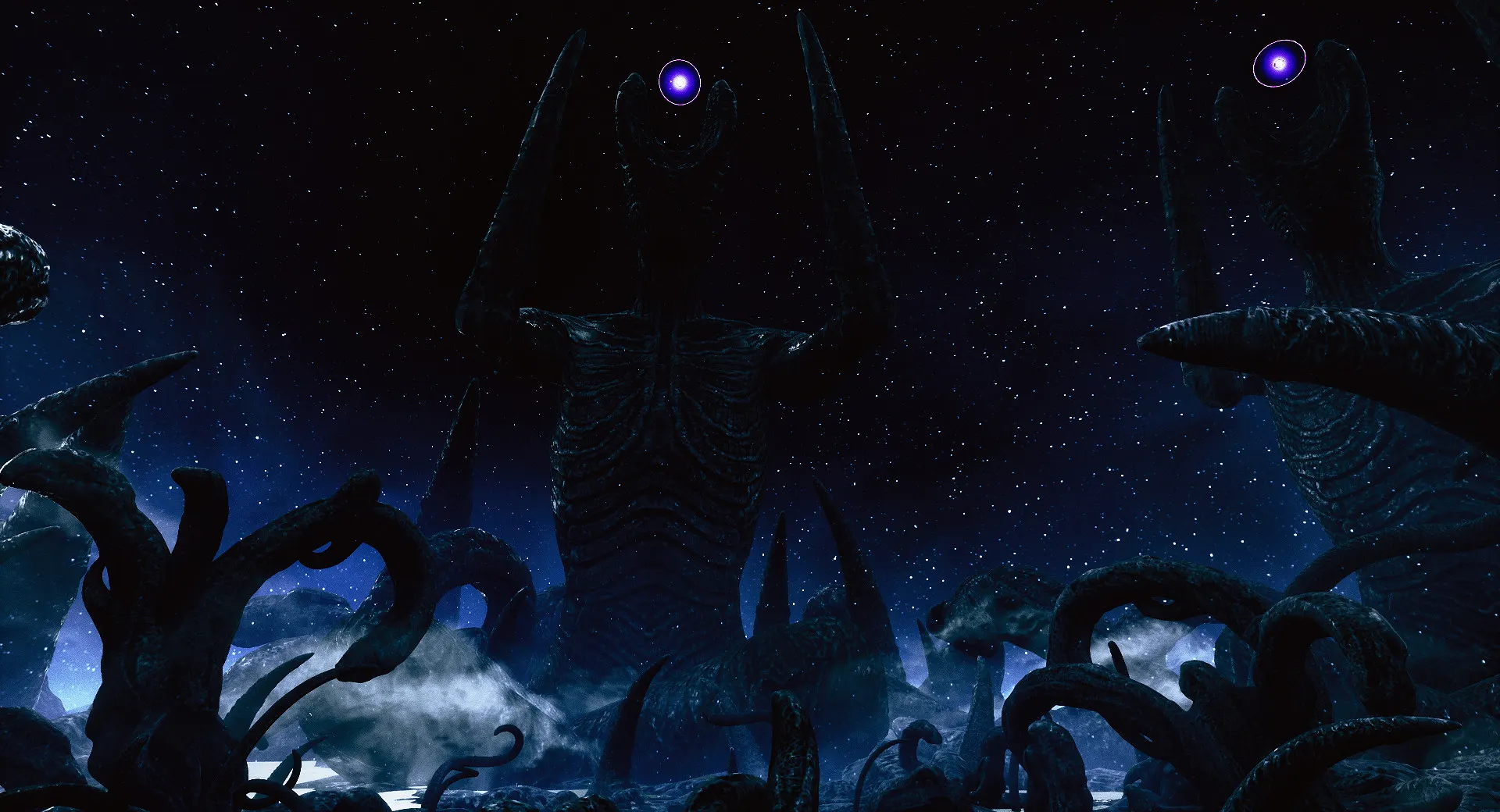
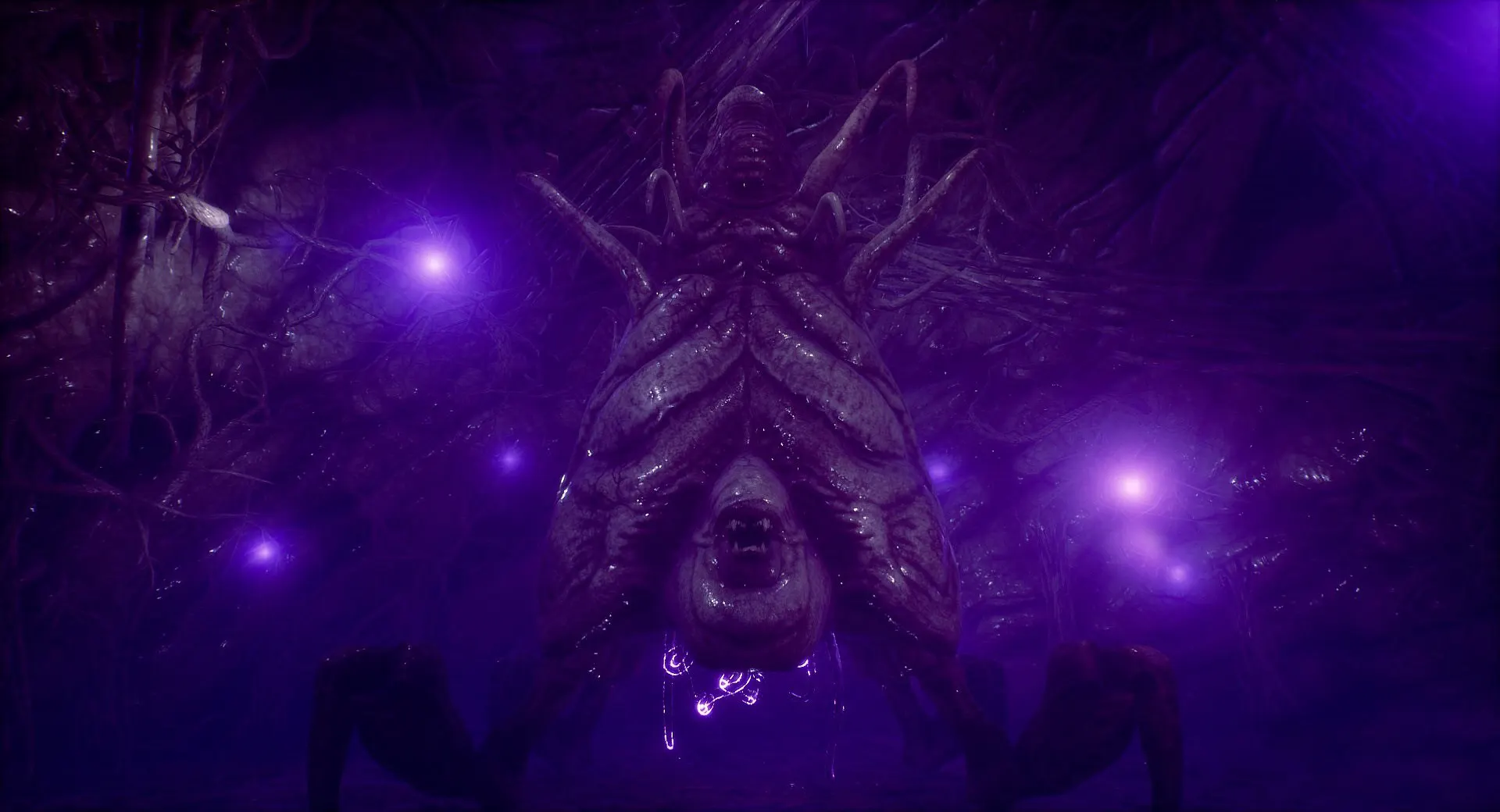
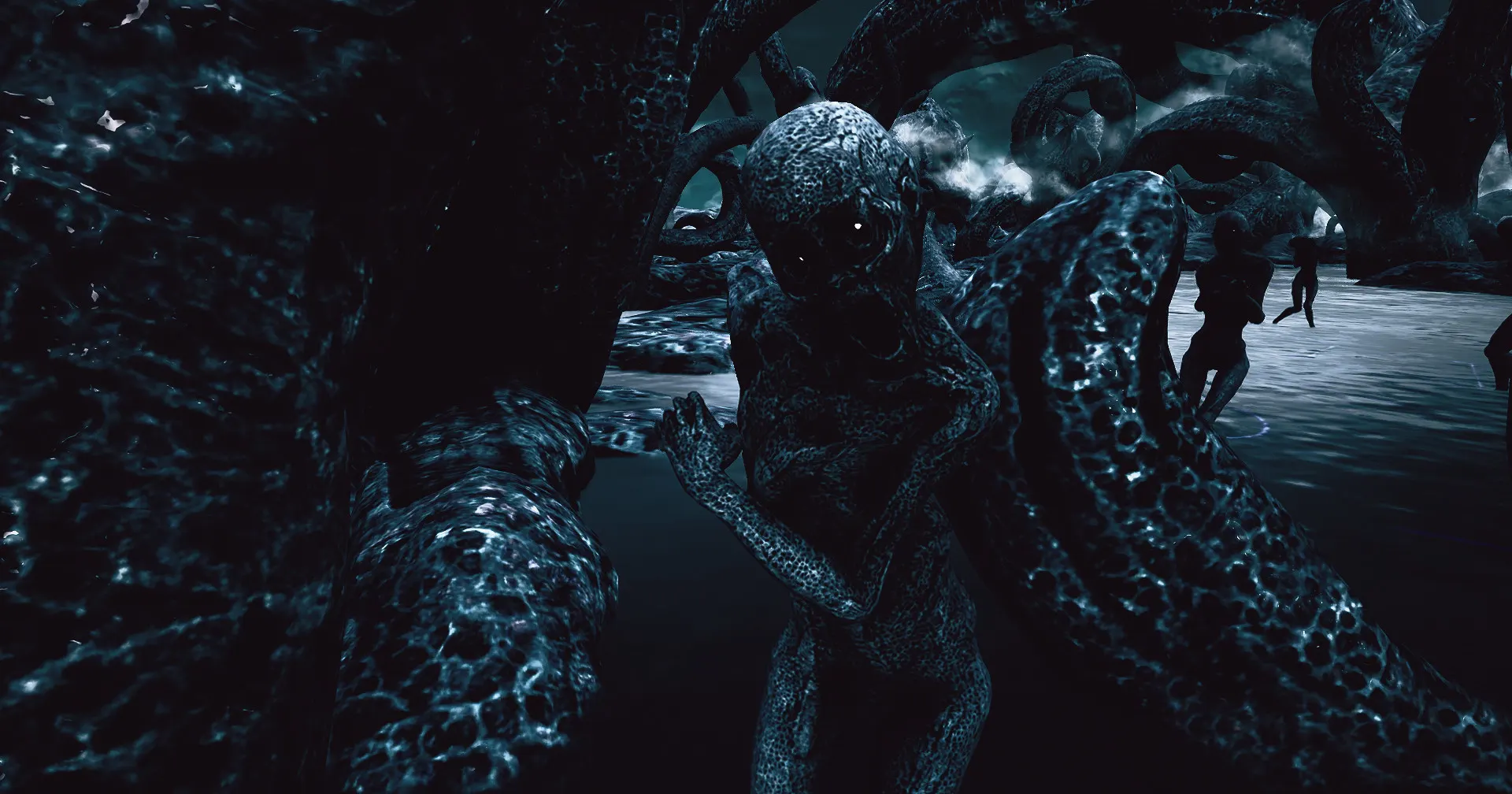
The game’s own description says its story “features many of his best-known creations”, and the Deep Ones are the easiest to recognise. On the island you meet scaled, man-shaped creatures that come out of the surf, the same shape that sits under the waves at Innsmouth. The trailers show them standing in the shallows and climbing out of the water.
The cult is there too, at least in name. One of the game’s achievements is called “Toss a coin to your cultist”. It is a joke, and it can also be read as a hint: Andrew is not the first person to come to this island, and the notes he finds were left by people who came before him.
The achievement named “Dagon” and the “Dagon Theme” by composer Thanos Zampoukas point to a meeting with the god himself. What happens there, and why, is for the player to find out. We will not spoil it here.
Why a fisherman
The choice of hero makes more sense once you have read Innsmouth. In Lovecraft, fishermen are the people closest to the deep: they take its riches and they pay for them. Andrew is a fisherman whose daughter has been taken by the sea, or by something living in it. He goes to the island to bring her back, which is exactly the trade the sea has never accepted.
If you want to read before you play, start with “Dagon”: it takes ten minutes and sets the mood. Then read “The Shadow over Innsmouth” for the Deep Ones, the cult and the town. Both are in the public domain and easy to find.
The setup of Andrew’s journey, without spoilers, is on the story page. The “Dagon Theme” and the rest of the score are on the soundtrack page.